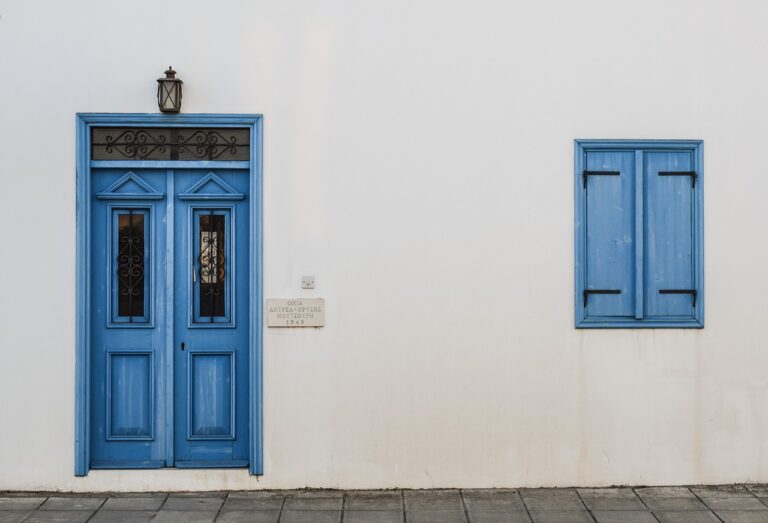
When looking for new doors there are quite a few factors to take into account. Continue reading to gain a good understanding of the basic differences, options, and costs involved in updating the doors of your home.
Internal hollow core doors often become damaged. They can be difficult to repair due to the materials they are made from.
For example, the cheap hollow core doors are lightweight, look great, and are easy to install. The only problem is that they are not very structurally sound. If they get hit, knocked, or slammed they can become easily damaged.
Sometimes it’s easier to replace the entire door. The cost of a new door depends on several factors outlined in the article. A new interior door will cost between $30 and $500 depending on the material, quality and requirements.
Continue reading for a guide to the different types of doors with all the pro and cons!
Types of Doors Available
Hollow core doors
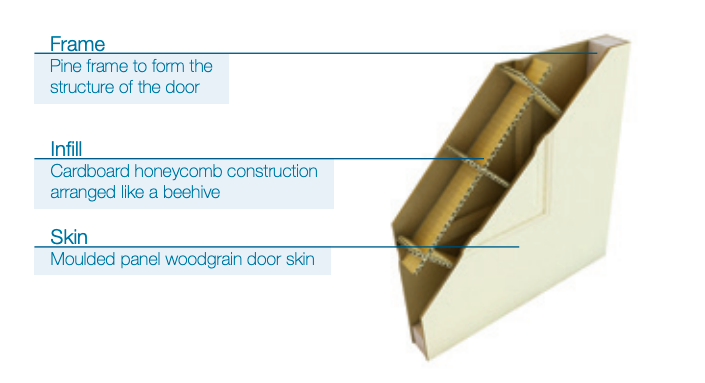
Hollow core doors are generally the cheapest option. A hollow core door is an internal door made with a 25 mm frame around the external edge of the door. A 4 mm timber composite material is used as the face material that covers a honeycomb cardboard core.
A hollow-core door can only have the lock installed on one side. The manufacturer places a sticker on the side of the door that has the framework to receive the door lock.
pros
Inexpensive
customizable- Manufactures can produce hollow core doors in many different styles and finishes
Light weight and easy to install
Inexpensive, Hollow core doors are usually the cheapest option
Cons
Structurally weak
Poor sound blockage
Difficult to repair
More difficult to cut to size as there is not much frame material
Solid core doors
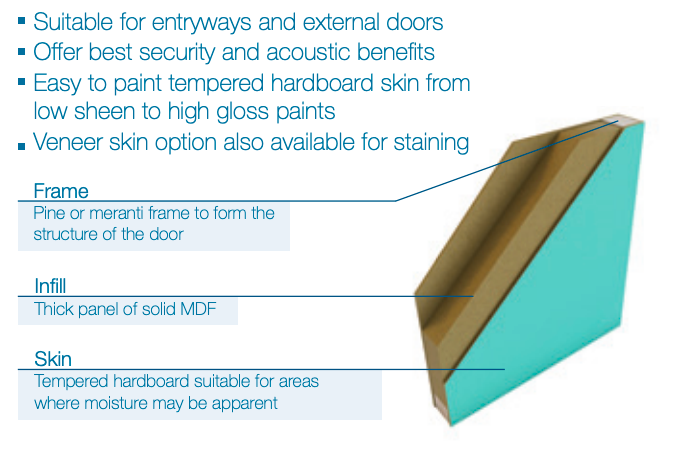
A solid core door is a multi-purpose access door. Solid core doors come with a varied option of different types of cores. The core is created using natural timber, or different composite timber materials. Solid core doors are produced in a few different methods that include; laminated veneer timber, solid timber panels, or moisture-resistant particleboard.
The finished surface of solid core doors is also made from a variety of materials depending on the finish required. The surfaces include; paintable grade plywood with a thickness of 3.6 mm, Duracote tempered hardboard sheet thickness 3.2 mm, MDF sheet thickness 4 mm.
pros
More affordable than solid wood doors
Customizable- Manufactures can produce solid core doors in many different styles and finishes
Resistant to expansion and contraction
Less chance of warping than solid timber doors
Sound resistant
Cons
Structurally weak
Poor sound blockage
More difficult to cut to size as there is not much frame material
Solid timber doors
Solid timber doors in modern buildings are not the most common option for internal doors. The reason is the cost and weight. Not to say there is not a place for them to be used as an internal door. Solid timber doors were the premium choice for internal doors in the past. But as time has progressed so has door manufacturing technology.
Hollow-core and solid core manufacturing techniques have developed to be in a position where many homes have internal composite core doors that are painted to give the impression of solid timber doors. But without the drawbacks of a solid timber door. Solid timber doors are still commonly used as external doors due to the natural weather-resistant properties of solid timber.
pros
Solid and hard wearing
Repairable
Excellent sound resistant properties
Adds value to the home
Variety of styles available
Cons
Most expensive option
Easily warped if not stored correctly
Difficult to install due to weight and timber finish
Internal/external Door sizes
Below are the standard internal door sizes that most door manufacturers produce. If you have a heritage home then the door frames could be made from imperial measurements.
The options you will have will be to have custom doors made to the correct sizes, or to cut down standard door sizes to make it fit yourself.
520 mm x 2040 mm
620 mm x 2040 mm
720 mm x 2040 mm
770 mm x 2040 mm
820 mm x 2040 mm ( most common size )
870 mm x 2040 mm
520 mm x 2340 mm
620 mm x 2340 mm
720 mm x 2340 mm
770 mm x 2340 mm
820 mm x 2340 mm
870 mm x 2340 mm
What are the cost of installing an interior door?
The cost to install an interior all depends on a few important factors. Are you going to install the door yourself? Or are you going to, do it yourself. I’m sure you can guess which option is the cheaper of the two right?
How much does it cost to install an interior door is not always a simple question. So let’s break down the costs involved together to get a good idea of a budget.
All we need to do is write down a list of the materials needed for each door. Take that list to your local building supplier, pick the style of door, lock, and hinges you like and get them to give to a price.
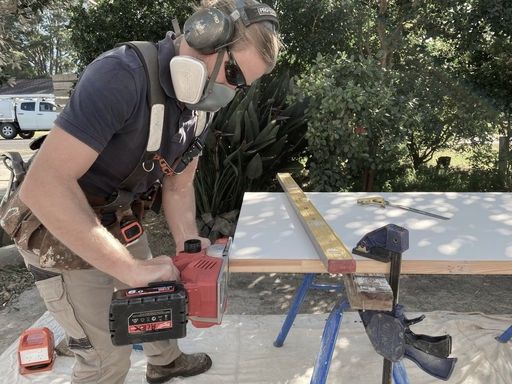
If you do it yourself you save having to pay a carpenter to do the work for you. If you don’t have the time or tools it can be easier to pay a professional to get the job done with no fuss.
I hope you have a clearer understanding of the different options of doors after reading the article! Thanks for reading. Feel free to leave me a comment if you have any questions.